Building a social media presence across Asia
Pan-Asia Social Strategy
A brand needed a unified social presence across multiple Asian markets. I set the overall social media strategy, grew the follower base, and built an engagement strategy that turned passive audiences into an active community.
See the results

Overview
The brand was active in several Asian markets but had no unified social media direction, posting was inconsistent, the voice shifted from market to market, and the audience wasn't growing or engaging.
As Social Media Specialist, I set the overall social media strategy across Asia. The goal was a single, coherent presence that grew the follower base in every market while building an engagement strategy that kept the community active long after each post went live.
Objectives
- Define one social media strategy that worked consistently across Asian markets.
- Grow the follower base steadily across every platform and region.
- Build an engagement strategy that turned passive followers into an active community.
- Keep the brand voice consistent while staying culturally relevant per market.
Audience
The audience spanned multiple Asian markets, each with its own language, platform habits, and cultural context. What they shared was a preference for fast, visual, mobile-first content and a tendency to follow brands that feel responsive and human.
The challenge was balancing a consistent brand identity with content that still felt local and relevant in each market.
Markets Handled
Set and ran the social media strategy across 12 markets in Asia and the Middle East:
Engagement Strategy
Growth came from treating engagement as a system, not an afterthought. The strategy combined a consistent content calendar, formats built for shares and saves, and active community management so the audience always had a reason to interact and a reason to come back.
- A unified content calendar with localized variations per market.
- Short-form video and interactive formats (polls, questions, trends) to drive engagement.
- Active community management, replies, comments, and DMs handled quickly to build loyalty.
- Consistent posting cadence and a recognizable brand voice across every region.
Execution Timeline
KPIs Tracked
Performance Dashboard
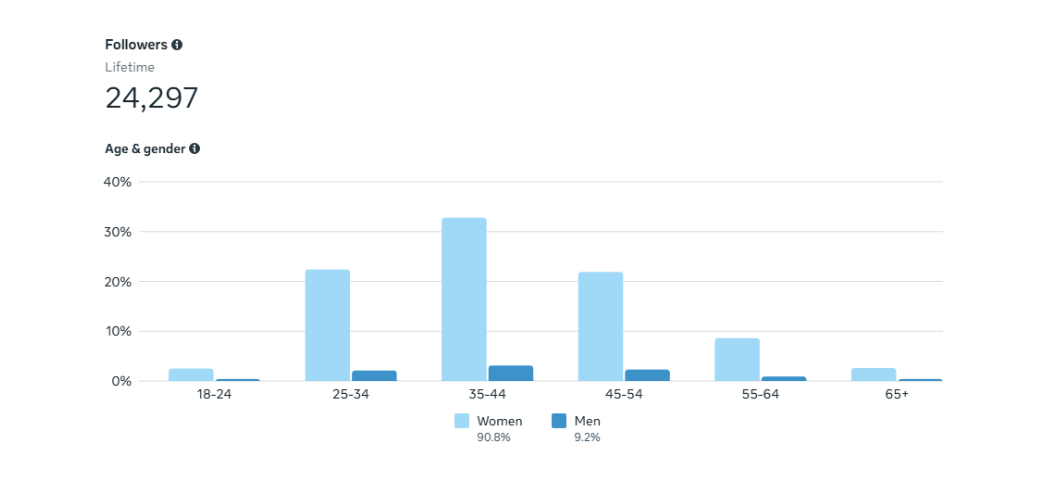
Source: platform audience insights. The strategy grew the community to 24,297 lifetime followers, heavily skewed toward women (90.8%) aged 25–54.
Key Results
- 24,297 lifetime followers built through a consistent, strategy-led content system.
- 90.8% women audience, concentrated in the high-value 25–54 age range.
- One social strategy rolled out consistently across 12 markets in Asia & the Middle East.
- A repeatable, scalable engagement system the brand could run long-term.
Channels & Tools
 Hootsuite
 Buffer
 Canva
Canva